
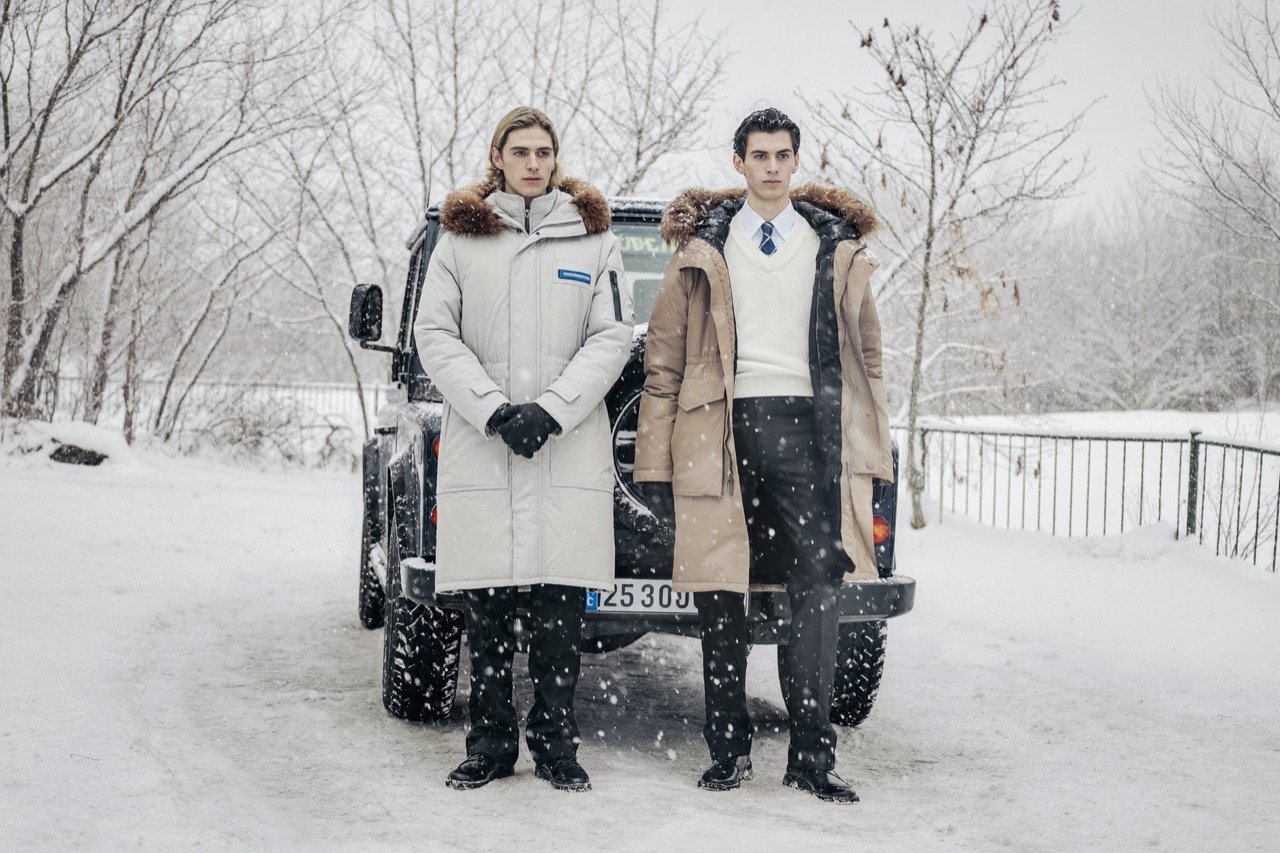
For those who value warmth that can be trusted, a parka is not a fashion purchase — it is equipment. We have tested ours on the Antarctic shelf at −52 °C, and the same logic that keeps an expedition moving applies to a January commute in Oslo or Munich. Here is what actually matters.
1. Start with the temperature rating — and be honest
A parka rated to −35 °C is not a luxury for most of Europe, but ratings assume you are moving. If you stand at a bus stop for twenty minutes, subtract ten degrees from any manufacturer's number. Our Blade and First Edition parkas carry a −35 °C rating earned in field testing, not in a laboratory spreadsheet: long-fibre Bertex Warmlett™ insulation holds its loft in deep cold and high humidity, which is precisely the combination that defeats cheap fill.
2. Understand what the insulation actually is
There are three honest technologies. Natural down — Bertex Down™ in our line — gives the best warmth-to-weight ratio and packs small; it needs care in wet climates. Long-fibre synthetics such as Bertex Warmlett™ keep their loft wash after wash and shrug off damp Baltic winters. Thin microfibre — Bertex Plume™ — is for mid-season and city wear: maximum warmth at minimum volume, following the lines of the body without bulk. Match the insulation to your winter, not to the picture in the catalogue.
3. The shell decides whether the insulation gets to work
Wind steals more heat than frost does. A wind-proof, water-repellent shell is what lets the fill do its job. Look for a membrane or an SDWR treatment, taped critical seams, and fabric that does not rustle stiff at −15 °C — cheap polyester does.
4. Details that separate equipment from clothing
A deep hood you can turn your head inside. Storm cuffs that seal the sleeve. A two-way zipper with a wind flap that works in gloves — ours are tested to stay smooth in deep frost. Pockets placed where a backpack hip belt does not block them. None of this is decoration; every element either earns its place or adds weight.
5. Fit: room for one layer, not three
A parka should close comfortably over a mid-layer fleece with room to move your shoulders. Bigger is not warmer — extra air space is exactly what your body has to heat. If you are between sizes, take the smaller one for the city and the larger one only if you genuinely layer heavily.
The short version
Decide your real temperature range, choose the insulation family that fits your climate, insist on a wind-proof shell, and check the five details above with your own hands. A parka chosen this way lasts a decade. That is the whole point.